Multi-State Sales Tax: Does Your Business Need to Register? (Nexus Guide)
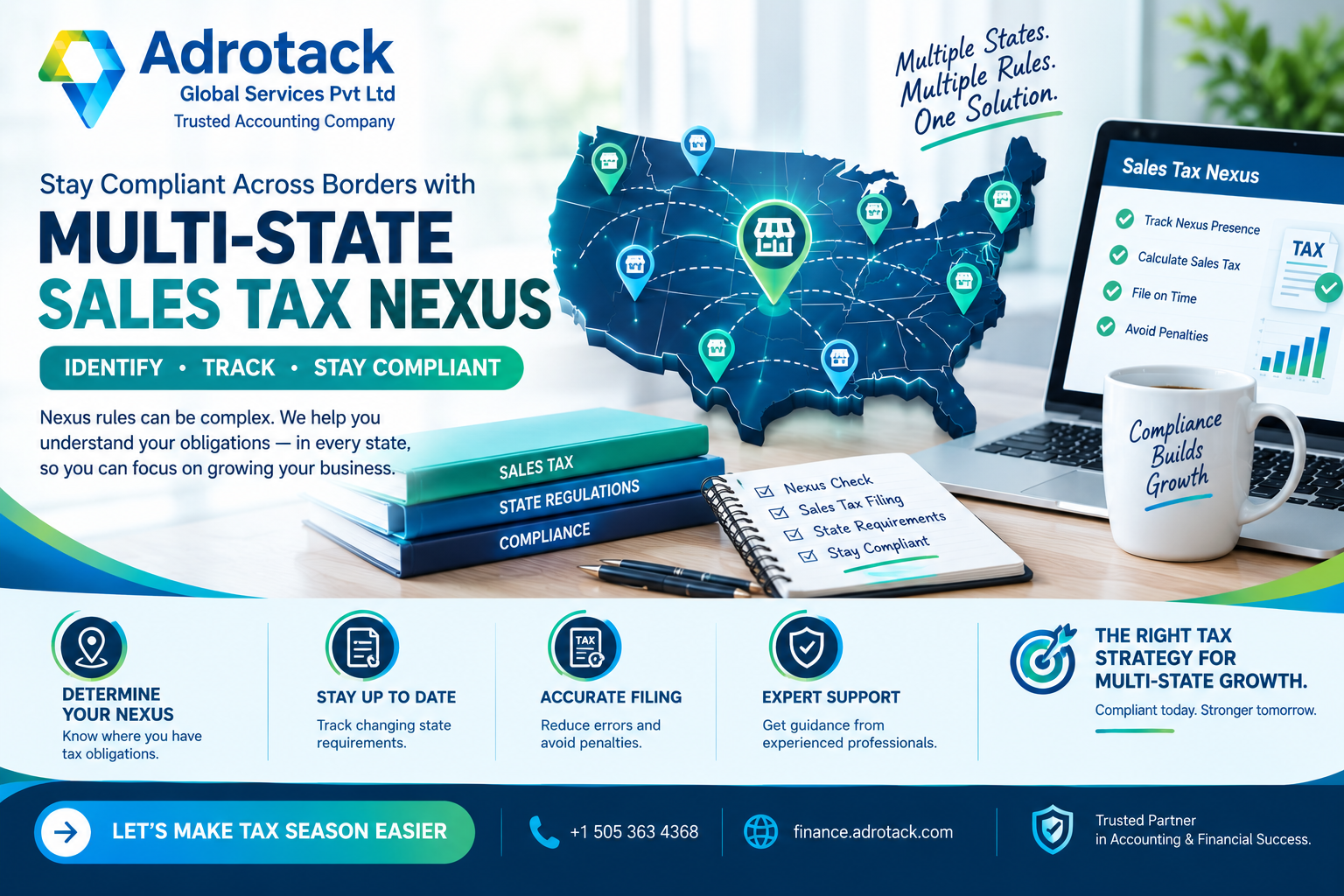
Selling across state lines can create sales-tax responsibilities that are difficult to manage with a single spreadsheet. The challenge isn’t just calculating a rate — it’s figuring out where you have an obligation in the first place. That obligation is called nexus, and it’s the single most important concept in multi-state sales tax compliance. Here’s what creates nexus, how to tell if your business has crossed a threshold, and when it’s time to get professional support.
What Is Sales Tax Nexus?
Nexus is the connection between your business and a state that’s substantial enough to require you to register, collect, and remit sales tax there. There are two main types:
- Physical nexus — created by a physical presence: an office, warehouse, employees, contractors, or inventory stored in a state
- Economic nexus — created by exceeding a state-set threshold of sales revenue or transaction count into that state, regardless of physical presence
Economic nexus became widespread following the U.S. Supreme Court’s 2018 decision in South Dakota v. Wayfair, which allowed states to require out-of-state sellers to collect sales tax based on economic activity alone, without a physical presence requirement.
What Creates Nexus? Common Triggers
A business can create sales tax nexus in a state through several types of business activity. Having an office, store, or warehouse in a state is a common physical nexus trigger, such as opening a retail location there.
Employees working in a state can also create physical nexus. For example, hiring a remote employee who lives and works in another state may create a sales tax obligation depending on that state’s rules.
Inventory stored in a state is another potential trigger. This can occur when a business uses a third-party logistics provider or fulfillment center that stores its inventory in that state.
Contractors performing work in a state may also create physical nexus, although the rules vary by state. For example, hiring a contractor to install products at customer locations could potentially create nexus.
Exceeding a state’s sales or transaction threshold can create economic nexus. This generally occurs when a business’s sales or transaction activity into a state reaches the threshold established by that state.
Trade shows or other temporary business activities can also create physical nexus in some states. For example, attending a trade show and taking customer orders while physically present in a state may have tax implications depending on the state’s rules.
Important: Exact sales thresholds, definitions, and nexus rules vary by state and can change over time. The examples above illustrate common categories of nexus triggers and should not be treated as specific thresholds or rules applicable to every business.
Does Selling Through a Marketplace (Amazon, Etsy, etc.) Change Anything?
Many states have marketplace facilitator laws, which shift the responsibility to collect and remit sales tax on marketplace sales to the marketplace itself in many cases. However, marketplace collection should never be assumed to settle every obligation:
- You may still need to register in a state even if the marketplace collects tax on your behalf there
- You may still have separate reporting responsibilities
- If you sell through both a marketplace and your own website (a mixed-channel model), your direct sales are typically not covered by the marketplace’s collection
Sales Tax Registration: What It Actually Involves
Registering for sales tax in a state typically means:
- Applying for a sales tax permit with that state’s tax authority
- Determining the correct filing frequency (monthly, quarterly, or annually — usually based on sales volume)
- Setting up a process to calculate, collect, and remit tax on taxable sales
- Mapping which of your products or services are actually taxable in that state (taxability varies by state and by product/service type)
- Managing exemption certificates for any tax-exempt customers
Product and Service Taxability Varies by State
Even once you’ve confirmed nexus, you still need to determine whether what you sell is taxable in that state. Physical goods, digital products, and services are often taxed differently from state to state — a service that’s taxable in one state may be exempt in another. This is a separate analysis from nexus itself and shouldn’t be assumed based on how your home state treats the same product.
When Should You Get Professional Support?
onsider a nexus review or professional support when:
- You’re expanding sales into new states
- Your inventory is stored by a third party (FBA, 3PL) in states you haven’t reviewed
- You’ve hired remote employees in new states
- You sell through both marketplace and direct channels
- Your transaction volume or revenue is growing quickly
- You’re managing exemption certificates for wholesale/resale customers
- You’ve started receiving notices from a state tax authority
- You’re preparing to acquire or sell a business (nexus exposure affects deal risk)
What a Multi-State Sales Tax Service Should Include
A comprehensive engagement typically covers:
- Nexus assessment across all relevant states
- Registration support
- Product/service taxability mapping
- Exemption certificate management
- Filing calendar setup and return preparation
- Reconciliation of collected vs. remitted tax
- Notice response support
The monthly control process should reconcile gross sales, exempt sales, marketplace sales, taxable sales, tax collected, tax remitted, and the related general-ledger liability — unexplained differences should be resolved before filing.
What If You Already Have Unregistered Exposure?
If you discover you should have been registered and collecting tax in a state for some time, don’t assume you should simply start registering going forward and ignore the past. Historical exposure decisions — including whether a voluntary disclosure agreement might reduce penalties — can have significant financial consequences and should be handled with state-specific professional advice, not a generic blog recommendation.
Frequently Asked Questions
Does my business need to register for sales tax in every state where I have customers? Not automatically. Registration is required only where you have nexus — either physical presence or economic activity exceeding that state’s threshold. Many businesses sell nationally but only have nexus, and registration obligations, in a subset of states.
What is economic nexus? Economic nexus is created when your sales revenue or transaction count into a state exceeds that state’s set threshold, even without any physical presence there. It became widespread after the South Dakota v. Wayfair Supreme Court decision.
If I sell on Amazon, does Amazon handle my sales tax? Often partially. Marketplace facilitator laws typically require Amazon to collect and remit tax on marketplace sales, but you may still need to register separately, and any sales through your own website are usually not covered.
Does storing inventory in a fulfillment center create nexus? It can. Inventory stored in a state — including through third-party logistics or fulfillment services — is a common physical nexus trigger, but confirm this against the specific state’s rules.
Do remote employees create sales tax nexus? Often, yes. Having even one employee working in a state is a common physical nexus trigger, separate from your sales volume into that state.
Is there one national sales tax return I can file? No. Sales tax is administered at the state and local level in the US, with different registration systems, forms, and filing frequencies for each state.
What happens if I should have registered in a state and didn’t? This creates historical exposure that should be reviewed with a tax professional — options like voluntary disclosure agreements may help reduce penalties, but decisions here have real financial consequences and shouldn’t be based on generic guidance.
Should I register in every state immediately to be safe? No. Registering in a state where you don’t actually have nexus creates unnecessary filing obligations and cost. Registration decisions should follow a fact-specific nexus and exposure review.
Are digital products and services taxed the same as physical goods? Not necessarily. Taxability varies significantly by state and by the specific type of product or service — this requires a separate taxability review even after nexus is confirmed.
How often do sales tax nexus rules change? State thresholds, rules, and rates can change over time. A business selling into multiple states should periodically re-review its nexus footprint rather than assuming a one-time review remains accurate indefinitely.
Conclusion
Sales tax nexus isn’t a single national rule — it’s a state-by-state determination based on your physical presence and economic activity in each state. As you expand into new states, add sales channels, or grow transaction volume, your nexus footprint can change. A periodic, fact-specific nexus review is the only reliable way to know where you actually need to register.